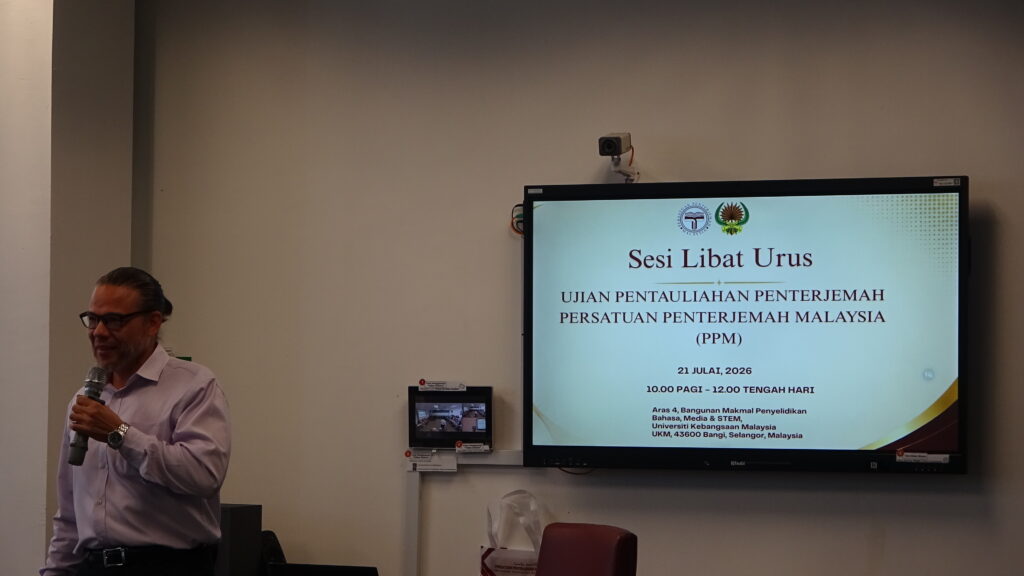
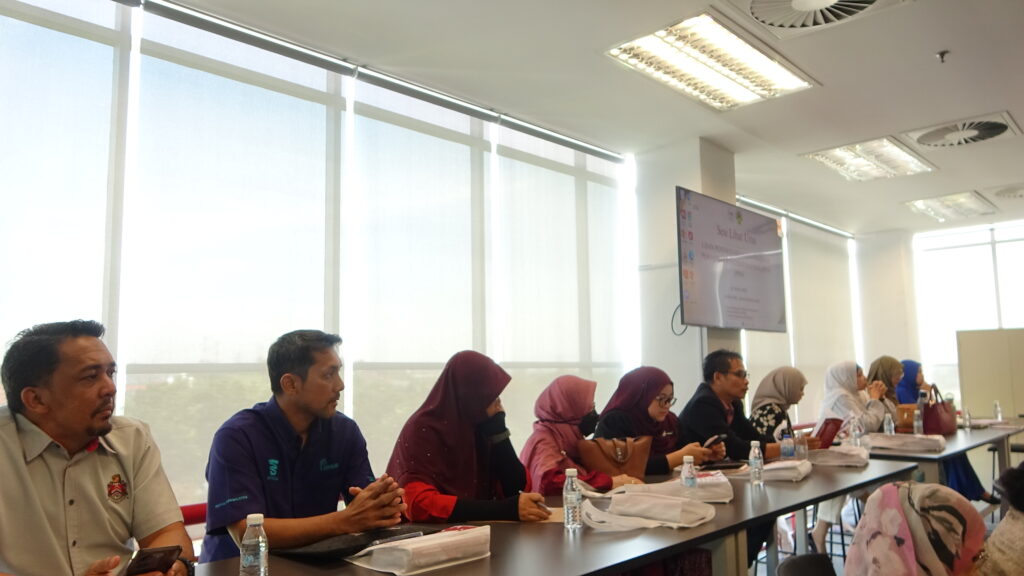
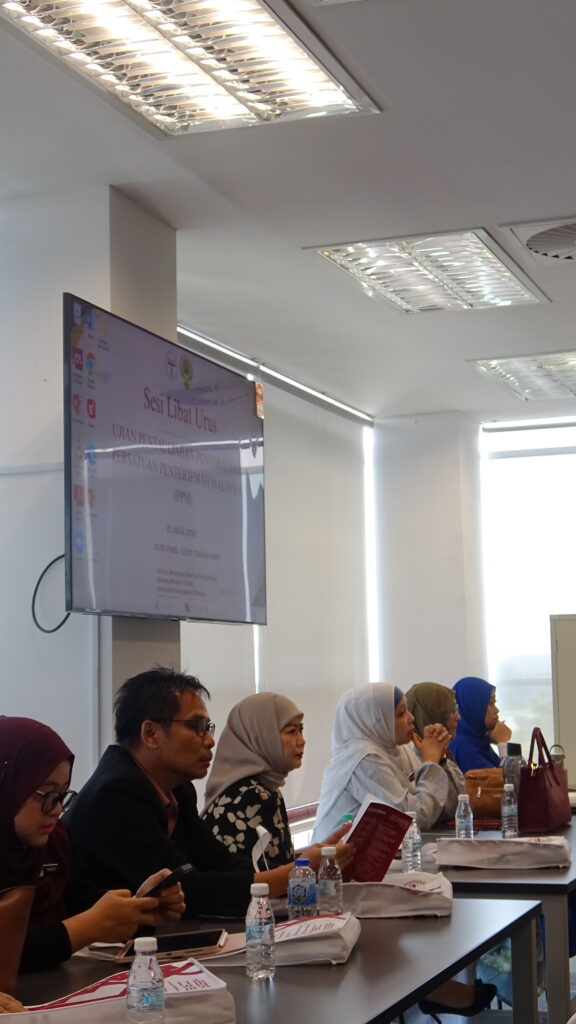
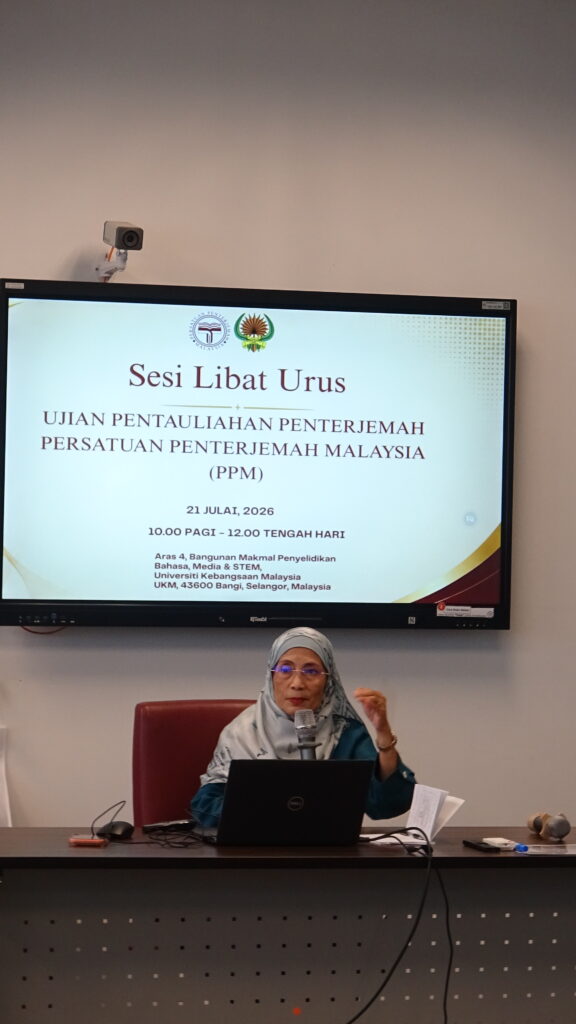
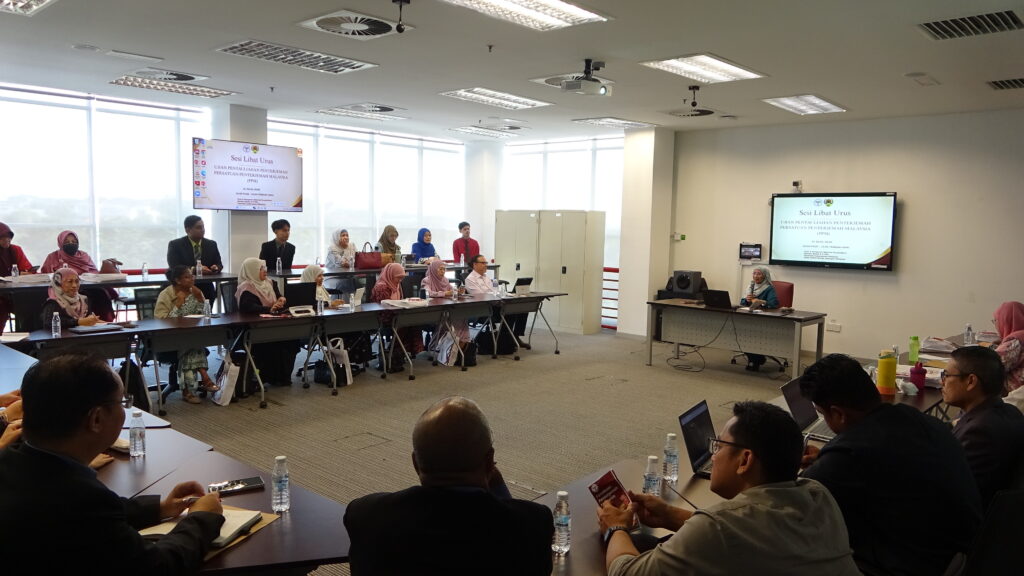
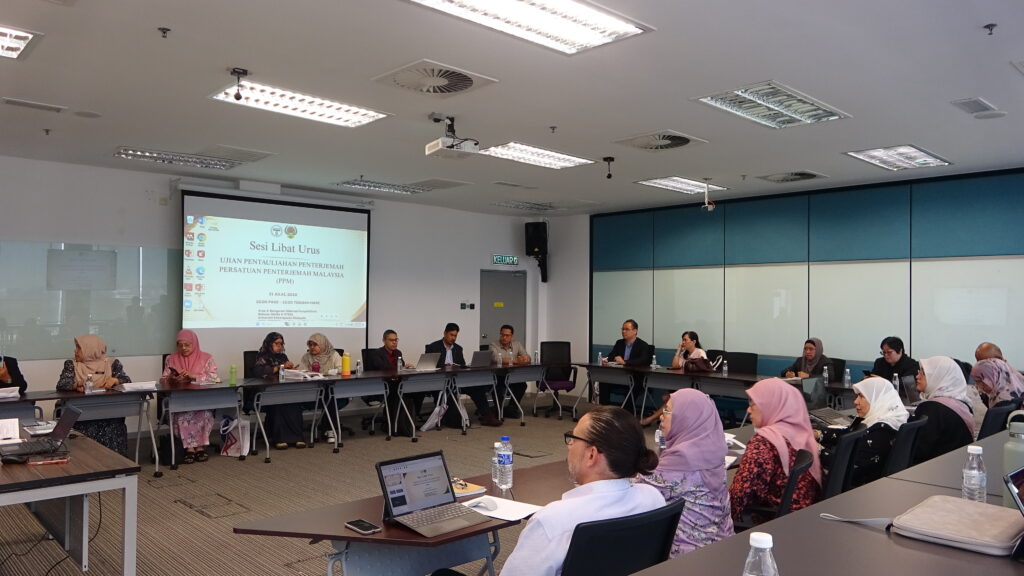
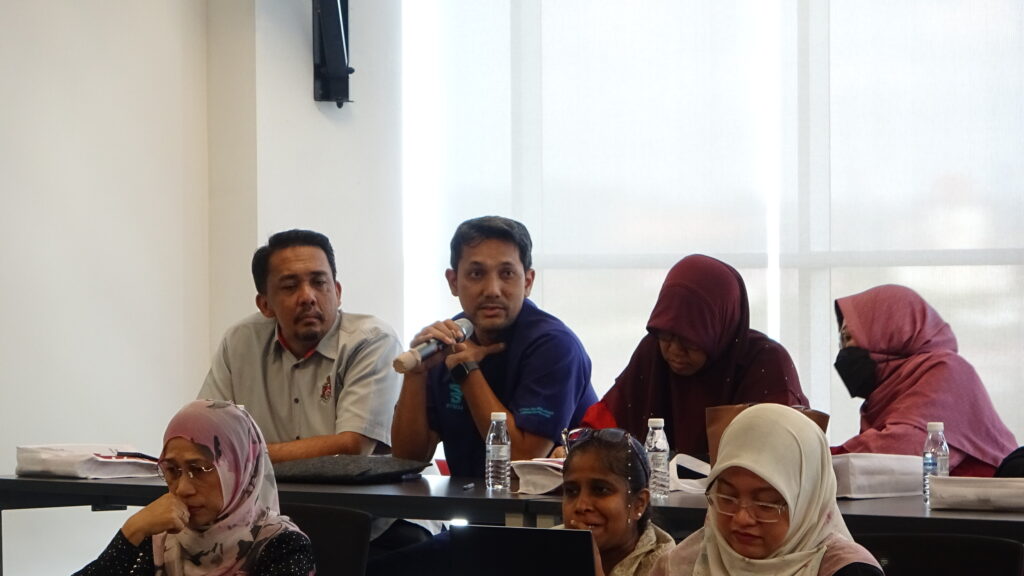
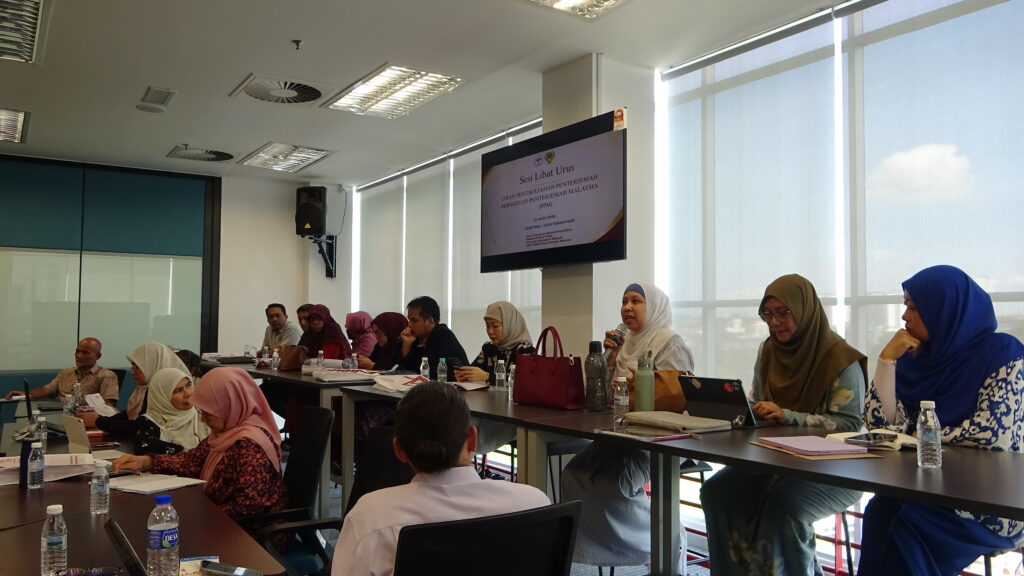
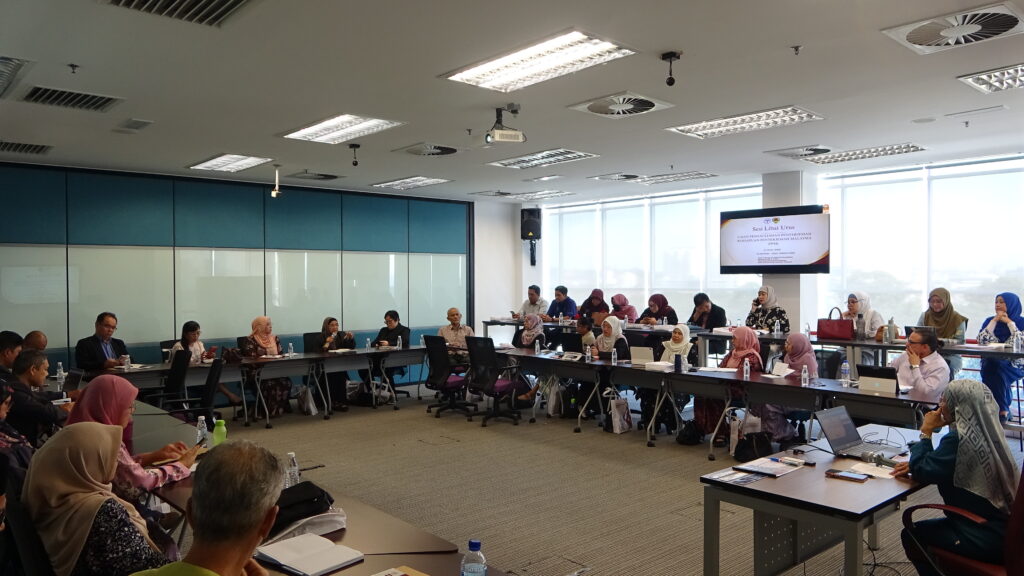
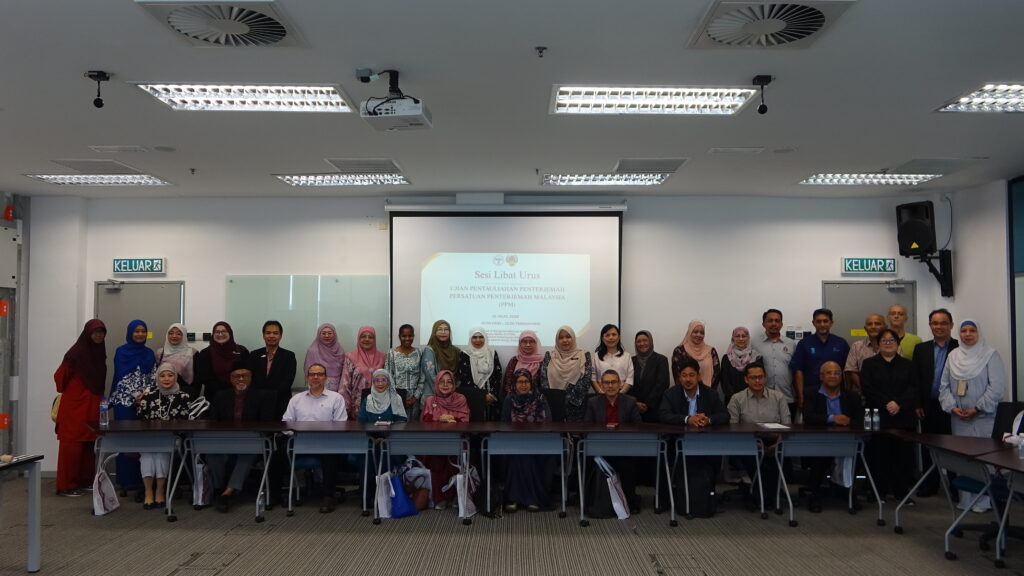
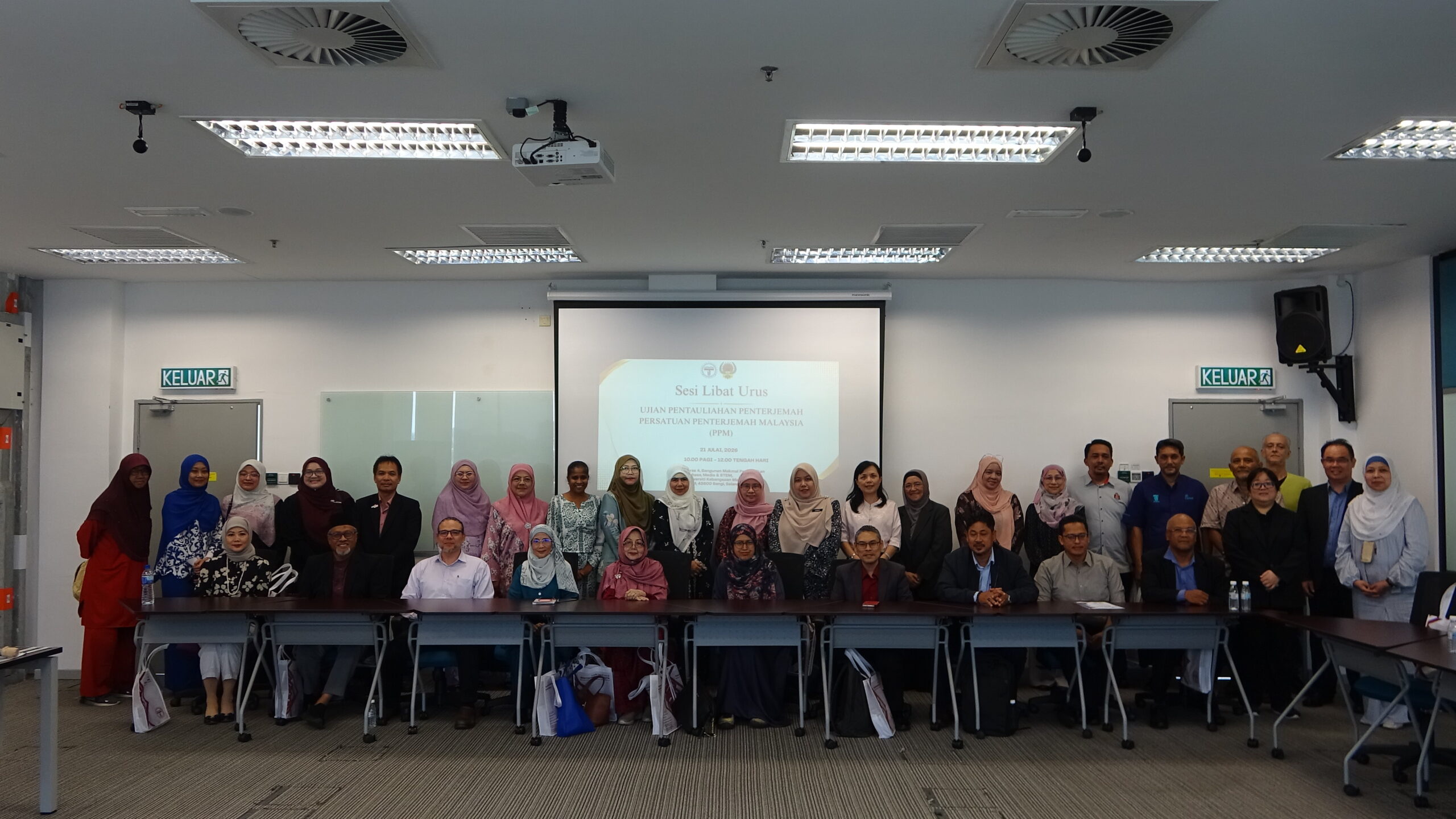
On July 21, 2026, the Malaysian Translators Association held an engagement session with the stakeholders for the Translator Certification Test at the National University of Malaysia, Bangi, Selangor. This session was attended by stakeholder representatives who have an interest in the translation industry in Malaysia, aimed at obtaining practical feedback to ensure that the MTA Certification System is relevant to the needs of the industry and acceptable to the users of translation services, as well as to look at its impact on the public, private, and academic sectors. Feedback from these stakeholders is also crucial for strengthening the legitimacy and credibility of the system before its official implementation, reducing the risk of industry rejection towards the implementation of the new system, and at the same time supporting MTA’s aspirations as the professional body regulating translation practices in Malaysia.
Representatives from departments, government agencies, higher education institutions, and private companies providing language and translation services present for this engagement session include the Dewan Bahasa dan Pustaka (Language and Literature Agency), the Department of Higher Education, Ministry of Higher Education Malaysia; the Ministry of Education Malaysia, the Ministry of Investment, Trade, and International Industry (MITI), the Ministry of Arts, Tourism, and Culture Malaysia (MOTAC), the Ministry of Communications Malaysia (RTM), the Kuala Lumpur City Hall Training Institute, BERNAMA, SIRIM Berhad, and the National Film Development Corporation (FINAS).
Other attendees included representatives from the National University of Malaysia (UKM), Universiti Sains Malaysia (USM), USM Press, Universiti Sains Islam Malaysia (USIM), the Malaysian Linguistic Association (PLM), the Malaysian Association of Translation and Creative Writing (PERSPEKTIF), the Federation of the Deaf Malaysia (MFD)/Malaysian Sign Language Interpreters Association (MyASLI), and representatives from companies offering professional translation services.
The two-hour session also included a brief introduction regarding the Translator Certification Framework by the MTA President, Dr. Hasuria Che Omar, followed by an explanation by Associate Professor Dr. Mohamed Zain Sulaimen (Certification Committee) about the upcoming Translator Certification Test. MTA anticipates that by early 2027, the names of candidates who pass this test will be listed in the MTA Certified Translator Register, which will serve as an important reference for government agencies, businesses, and the general public to obtain professional and reliable translation services from certified translators. Generally, this certification process aims to ensure that translators possess the knowledge, skills, and professional competency required to provide quality translation services. Through this certification, the field of translation can also be recognized as a professional career that requires formal assessment, ethical standards, and ongoing professional development. Translation is a unique career grounded in academic knowledge, technical skills, and professional ethics. Therefore, the need for certification is very important.
Positive feedback was received during the discussion session, and MTA also gained support and cooperation from stakeholders for this certification effort. The Translator Certification Test is expected to be launched in September 2026.
Malaysian Translators Association